Error: No feed found.
Please go to the Instagram Feed settings page to create a feed.
Did you know…? the synagogue of córdoba
We continue with the new section, because what better way to get to know a city than by telling stories, legends or curiosities of the most charming places.
Today we talk about our Jewish origin with The Synagogue of Córdoba. Keep reading you will love it.
His story
La Sinagoga de Córdoba It is a Hebrew temple that is located in the Jews street of this city. It was built in the year 1315 (5075 of the jewish calendar), in Mudejar style, by builders directed by Yishaq Moheb.
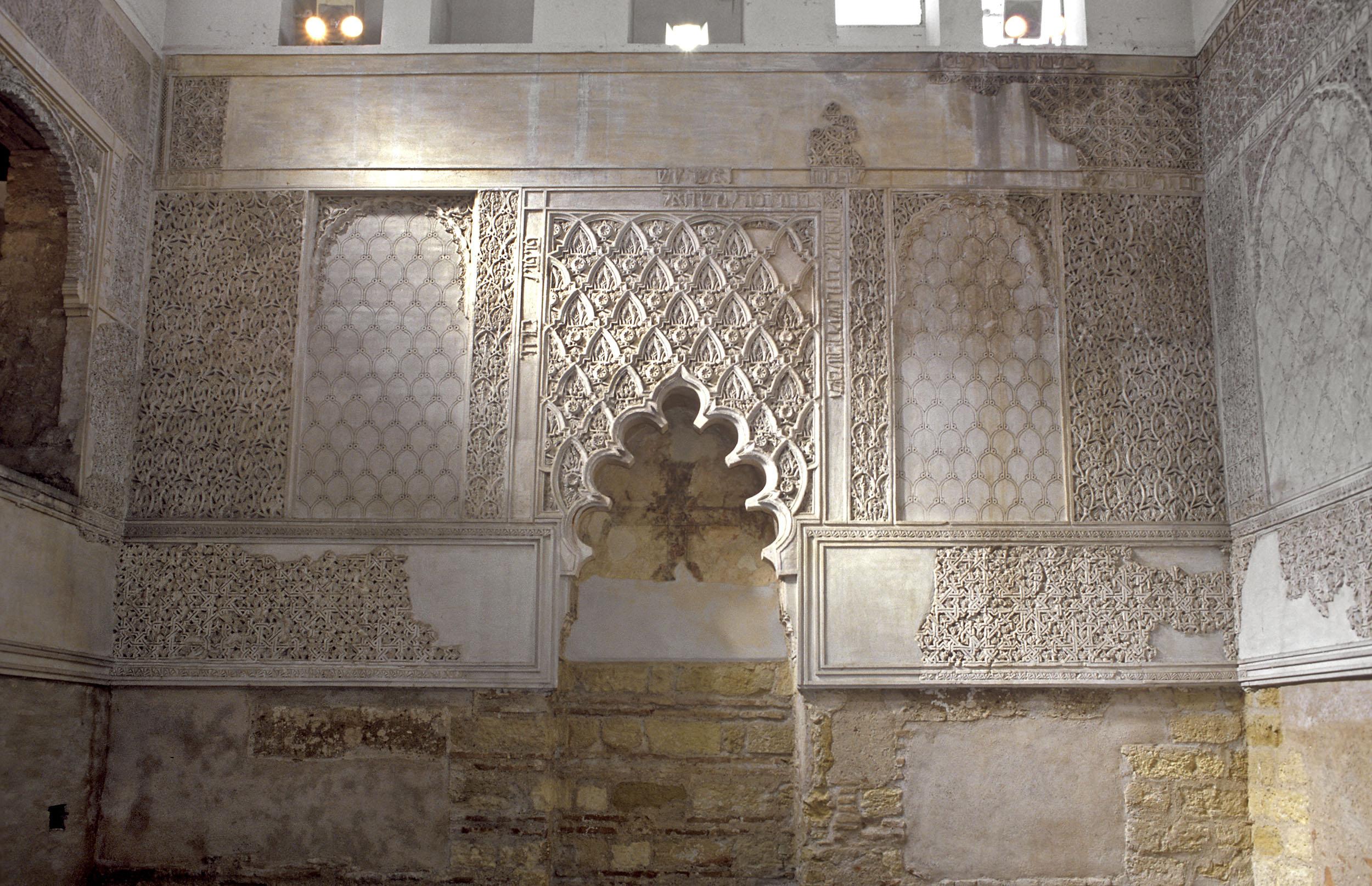
After the expulsion of the Jews in 1492 the building was dedicated to various functions: Santa Quiteria hydrophobic hospital, Hermitage of San Crispin of the Shoemakers Guild since 1588 and National Nursery School until it was declared a National Monument in 1885. In 1884, one year before, Part of the plaster that covered the walls had come off., thus revealing the plasterwork walls that originally decorated the enclosure..
Since then it went through several phases of restoration such as Felix Hernandez en 1929 and those initiated in 1977 until we reach the reopening of the building in 1985 on the occasion of the celebration of 850 birth anniversary of Maimonides.
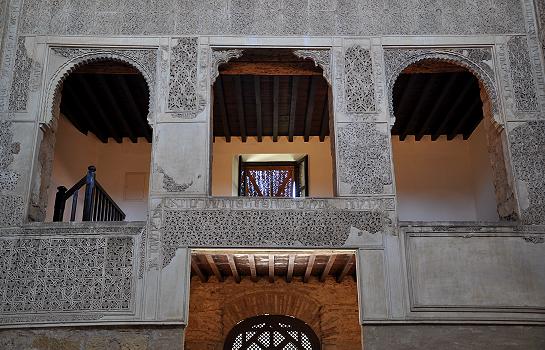
It consists of a patio that is accessed from the street and leads to a vestibule followed by the prayer room.. From the eastern side of the hall begins the staircase that leads to the women's gallery..
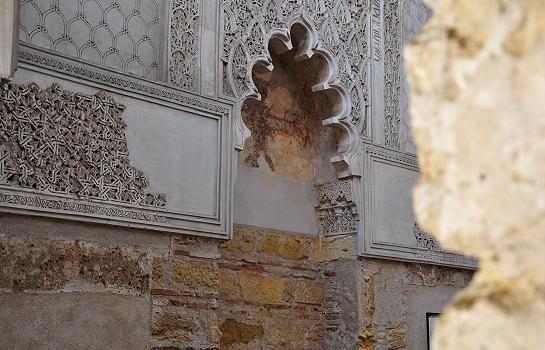
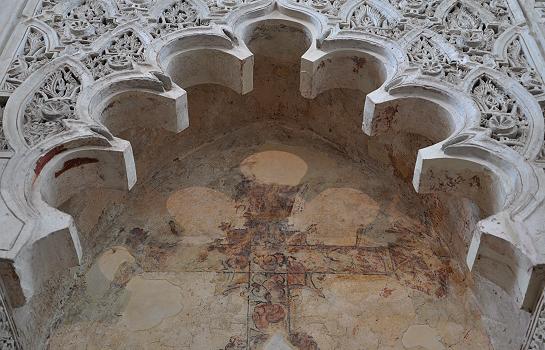
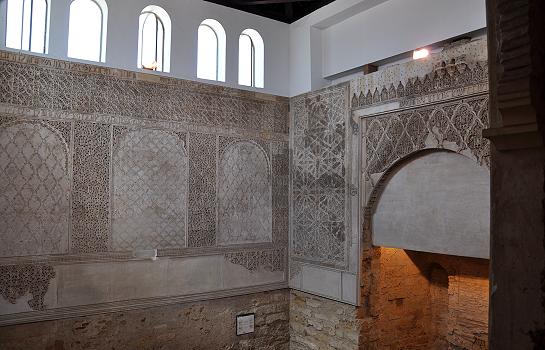
The prayer room is almost quadrangular in plan., con 6’95×6’37 m, It has a coffered ceiling and reaches a height of more than 6 meters; On its eastern side the tabernacle opens, space reserved for the Torah and crowned with an arch framed in an alfiz. The side opposite the tabernacle has a small niche with a multi-lobed and pointed arch., where the altarpiece of Santa Quiteria was. The lower area of the walls of the Prayer Room lost its decoration, Currently, only the rich plasterwork of the upper part is preserved..
The ornamental work shows two very different styles.; The area corresponding to the women's tribune is decorated with plasterwork of rich and complicated design., that reveals Granada influences in the work. The remaining walls show a grid of lobed arches with a pineapple in the center., whose aesthetics are close to Toledo art. The decoration is completed with prayers taken from the book of Psalms. Plaster decoration, with Mudejar motifs, up to two meters in height has been lost, leaving the brick of its factory exposed. In the 18th century the coffered ceiling was replaced by a vault decorated with plasterwork..
In the eastern wall there is a hole intended to house the “to” or ark in which the five books of the Pentateuch were kept. To the right of this hole an inscription in the text alluded stored at Yishaq Moheb, founder of the Synagogue. Faced with this can be a beautiful arc polilobulado was the framing of “bimah” the pulpit. pictorial remains are seen representing a cross, fechable likely in the sixteenth century.
Visitor Information
|
Direction |
C / Jews |
|
Opening Hours |
Del 16 September to 15 of June Saturday Sunday and festive Closed Monday Del 16 June to 15 of September Sunday and holidays Closed Monday last screening 30 minutes before closing. |
|
Entry |
EU citizens free, rest 0,30 EUR |
|
Environment |
Municipal Zoco, Museo Taurino, Puerta de Almodóvar, Mezquita, Casa de Sefarad, Casa Andalusí, Alcázar de los Reyes, Arab baths |